A Snowbird's Guide to Buying a Home in Tucson
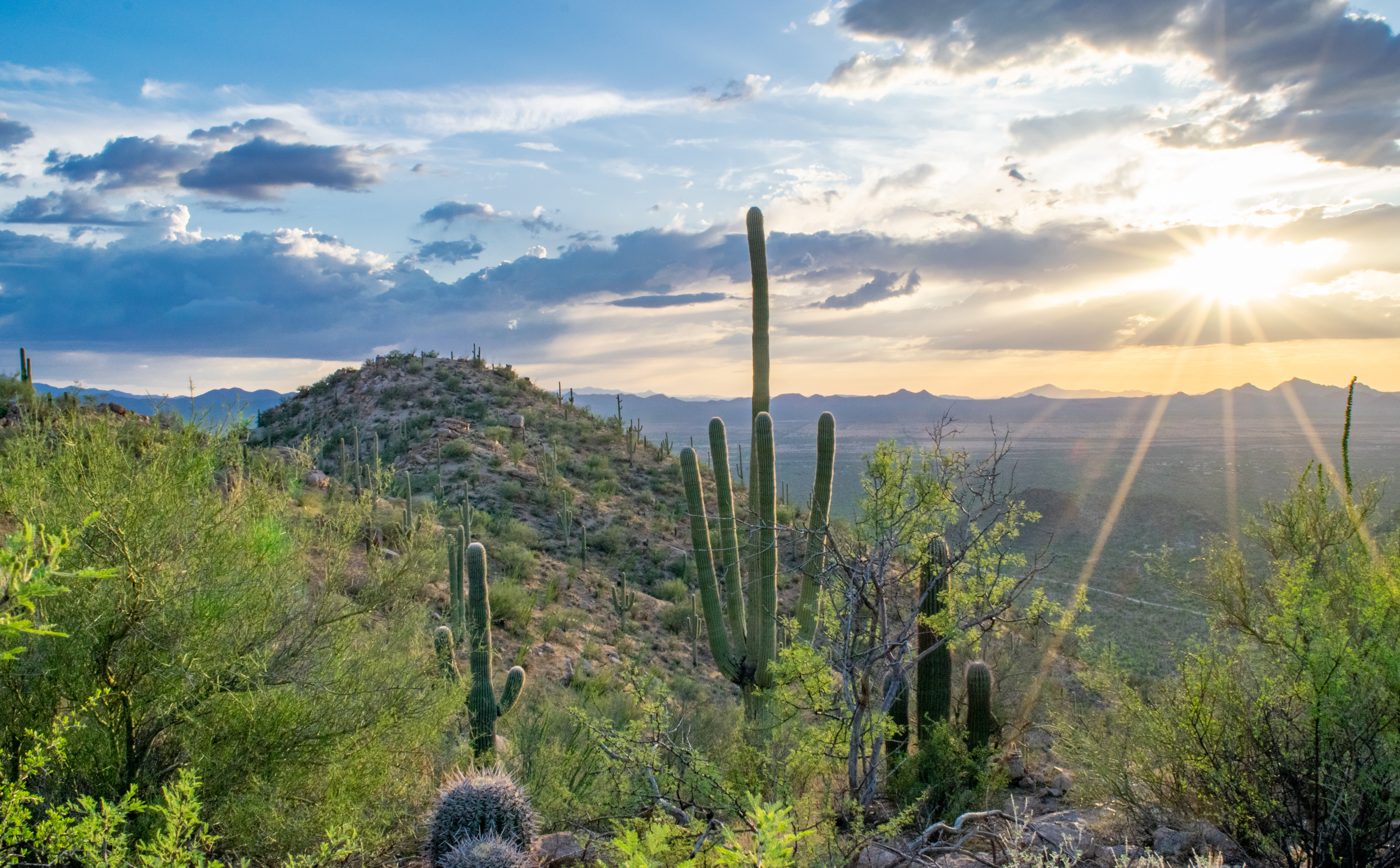
If you've spent one too many winters scraping ice off your windshield, you're not alone. Thousands of "snowbirds" head to Tucson each year for 300+ days of sunshine, mild winters, and a relaxed desert lifestyle. For many, renting eventually gives way to a bigger question: should we buy a winter home in Tucson? This guide walks through what every snowbird should know before making that move, and it is the starting point for our full snowbird resource hub, where we keep the route guides, tax explainers, and community comparisons in one place. When you are ready to look at specific neighborhoods, our Tucson communities guide covers each area in more detail.
Why snowbirds love Tucson
Tucson offers warm, dry winters with daytime highs typically in the 60s and 70s, stunning mountain scenery, and a lower cost of living than many Sun Belt rivals like Scottsdale or coastal California. You'll find world-class golf, hiking in the Catalina and Rincon mountains, a vibrant food scene, and easy access via Tucson International Airport. For retirees especially, the combination of sunshine and value is hard to beat, and after more than 20 years of helping winter residents settle here, we can tell you the appeal does not wear off.
Best Tucson areas for snowbirds
Where you buy depends on your lifestyle. A few favorites among seasonal residents:
- Oro Valley & SaddleBrooke: polished, amenity-rich communities at the base of the Catalinas, popular with active retirees and busy all year.
- Catalina Foothills: upscale homes with mountain and city views, close to dining and shopping.
- Green Valley & Sahuarita: south of the city, known for affordable 55+ living, Green Valley Recreation (GVR) amenities, and quiet desert surroundings. This is the most snowbird-heavy corner of Southern Arizona.
- Dove Mountain (Marana): resort-style, newer construction with golf and a Ritz-Carlton community.
Not sure which fits? Our Tucson communities guide compares each area in more detail, and if age-restricted living appeals to you, our guide to the best 55+ communities in Tucson goes deep on SaddleBrooke, Sun City Oro Valley, Dove Mountain, Green Valley, and Quail Creek.
Costs and ownership considerations
Beyond the purchase price, snowbirds should plan for a few Tucson-specific factors:
- HOAs and GVR: Many golf and active-adult communities have monthly HOA dues that cover amenities and landscaping, convenient when you're away half the year, but budget for them. In Green Valley, GVR membership attaches to the home: for 2026 that is $545 per household per year plus a one-time $3,200 membership change fee paid at closing (gvrec.org).
- Property taxes: Arizona's property taxes are relatively low compared to many northern states, which is a pleasant surprise for buyers from the Midwest or Northeast. A winter home is taxed a little differently than a primary residence, though, and we explain exactly how below.
- Lock-and-leave upkeep: A desert-landscaped (xeriscaped) yard and a trusted home-watch service make leaving for the summer far easier.
- Insurance & summer heat: Factor in cooling costs and home maintenance for the months the house sits empty. Tell your insurer the home will be unoccupied for extended periods; some policies have vacancy clauses.
- Special districts: Parts of Marana around Dove Mountain sit in community facilities districts (CFDs) that add to the tax bill, while unincorporated Green Valley has no city property tax. Two homes at the same price can carry different annual bills.
Which snowbird route are you driving?
Most of our winter clients drive down rather than fly, and the drive is easier with a plan. If you are leaving from the Twin Cities, our Minnesota to Arizona road trip guide covers the roughly 1,650-mile, 25-hour run from Minneapolis to Green Valley stop by stop. Chicagoland readers should start with the Chicago to Tucson road trip guide, about 1,750 miles and 26 hours on the road. From Detroit, the Michigan to Arizona road trip guide maps the longest of the bunch at roughly 2,100 miles and 31 hours. Milwaukee and Madison drivers will want the Wisconsin to Arizona road trip guide, about 1,950 miles and 29 hours via the I-44 and I-40 corridor. And if you are coming from Des Moines or Cedar Rapids, the new Iowa to Arizona road trip guide picks the winter-safe route south. Every guide flags the high passes, the Oklahoma turnpike tolls, and the motels that close for the season.
Arizona property tax on a second home, in plain English
This is the part of the conversation where most snowbirds lean in, so here it is without the jargon. Arizona sorts every property into a legal class. A home you live in as your primary residence is Legal Class 3. A home you own but do not live in full-time, which is what a snowbird's Tucson house is, is Legal Class 4 (non-primary residence). Per the Pima County Assessor, both classes are assessed at the same 10% ratio, so the classification itself does not change the math on the value side.
What it does change is one credit. Class 3 primary residences receive the homeowner rebate, which shows up on the tax bill as the State Aid to Education credit and reduces the school district portion of the primary tax. Class 4 non-primary residences are not eligible for it, again per the Pima County Assessor. That is the whole difference: a snowbird pays the same rates on the same assessed value as the neighbor who lives there year-round, minus that one credit. In Arizona you get exactly one primary residence, so if your Minnesota or Wisconsin house is home, your Tucson house is Class 4 by definition.
Two more pieces of good news. First, since voters passed Proposition 117 in 2012, the taxable value of a home (the Limited Property Value, or LPV) can rise no more than 5% per year, and it can never exceed the full cash value, according to the Arizona Department of Revenue. Your bill will not double because the market did. Second, Arizona has no real estate transfer tax. Proposition 100, approved by voters in 2008, amended the state constitution to prohibit any new tax, fee, or stamp requirement on selling, buying, or transferring real property. If you are used to paying a transfer tax on closing back home, that line item simply does not exist here.
We walk through the full bill, including CFDs, school districts, and how to read the Assessor's notice of value, in our post on Arizona property tax for a snowbird's second home.
Buying when you are 1,500 miles away
A surprising number of our snowbird purchases close while the buyer is still up north. The tools have caught up with the lifestyle:
- Video showings. We walk the home on a live video call, open every closet, run the faucets, and step outside to show you the view and the neighbors. Recorded walkthroughs follow so you can rewatch at your own pace.
- Electronic signatures. Arizona's Electronic Transactions Act gives electronic signatures the same legal effect as ink, so the purchase contract, disclosures, and addenda are signed from your kitchen table.
- Remote online notarization. Arizona allows the closing documents that need a notary to be signed over a live audio-video session. The Arizona Secretary of State's rule is that the notary must be physically in Arizona; you, the signer, can be anywhere, including another country.
- Inspections you can attend. Your inspector's report comes with photos, and we can put the inspector on video for the walkthrough summary.
One of our 2025 clients bought a Green Valley townhome this way and wrote afterward on Zillow: "David was great with research and communication. He helped us find and purchase a home sight unseen. When we were worried, rattled, or confused, he was an expert at clarifying things, and always maintained a calm demeanor. Whether buying, or selling, we would highly recommend him as a knowledgeable realtor." Our step-by-step guide to buying a Tucson home from out of state covers the whole remote process, from lender pre-approval to keys.
Leaving in April: the lock-and-leave basics
The second half of snowbird ownership is leaving well. The homes that come through a Tucson summer without drama share a short checklist:
- Hire a home-watch service to walk the house every week or two, and give your HOA and a neighbor their number.
- Shut off the water at the main and drain what you can; a slow leak in an empty house for five months is the most expensive mistake we see.
- Set the thermostat, do not switch it off. A smart thermostat holding the house in the low to mid 80s protects finishes, electronics, and drywall without running up the bill.
- Put the irrigation on a summer schedule and have someone check the drip lines after the monsoon storms start.
- Tell your insurer and your utilities that the home will be unoccupied, forward the mail, and set up autopay for the HOA and property taxes.
- Empty the fridge, seal the drains, and set pest control before you go; the desert finds its way indoors when a house sits quiet.
The complete version, room by room, is in our snowbird lock-and-leave checklist for Tucson.
Green Valley vs SaddleBrooke vs Oro Valley at a glance
These three come up in nearly every snowbird conversation we have, and they are genuinely different. Drive times are rough, from central Tucson in normal traffic.
| Community | Drive to central Tucson | Age rule | Fee model | Year-round or seasonal |
|---|---|---|---|---|
| Green Valley | Roughly 30 minutes south on I-19 (about 25 to 30 miles) | Most neighborhoods are 55+; a few are not age-restricted, so check the specific HOA | GVR dues of $545 per household per year plus a one-time $3,200 membership change fee at closing; many neighborhoods add little or no HOA on top; unincorporated, so no city property tax | Leans seasonal: full in winter, noticeably quieter in summer |
| SaddleBrooke | Roughly 35 to 45 minutes north | Original neighborhoods admit from age 45; SaddleBrooke Ranch is 55+ | Monthly HOA dues covering recreation centers and clubs (commonly $200 to $300 at the Ranch, depending on section), with golf billed separately | Year-round: clubs, leagues, and restaurants stay busy through summer |
| Oro Valley (Sun City Oro Valley) | Roughly 25 to 30 minutes northwest (about 15 miles) | Sun City Oro Valley admits from age 45; the wider town has no age rule | HOA dues covering the amenity centers and pools, golf separate; ask for the current schedule before you offer | Year-round: established, neighborly, and active in every season |
For the long version, including what each one feels like on a Tuesday in February and a Tuesday in July, read our Green Valley vs SaddleBrooke vs Oro Valley comparison.
"The biggest mistake I see snowbirds make is buying before they know the neighborhoods. Spend one season renting in the area you're eyeing, then buy with confidence." David Urbaniak
Renting first vs. buying now
If you're new to Tucson, renting for a season or two lets you test neighborhoods, commute times to golf or family, and how the community feels in peak winter months. If you already know and love an area and plan to return for many winters, buying can build equity and lock in your spot. With no transfer tax and a 5% cap on taxable value growth, the carrying costs of a Tucson winter home are more predictable than most northern buyers expect. We're happy to run the rent-vs-buy numbers with you based on your situation, and our buyer services page explains how we work with clients who are shopping from a distance.
Tucson Snowbird FAQ
Why do snowbirds love Tucson?
Tucson offers warm, dry winters with daytime highs typically in the 60s and 70s, stunning mountain scenery, and a lower cost of living than many Sun Belt rivals like Scottsdale or coastal California. Add world-class golf, hiking in the Catalina and Rincon mountains, a vibrant food scene, and easy access via Tucson International Airport. For retirees especially, the combination of sunshine and value is hard to beat.
What are the best Tucson areas for snowbirds?
Favorites among seasonal residents include Oro Valley and SaddleBrooke (polished, amenity-rich communities at the base of the Catalinas), the Catalina Foothills (upscale homes with mountain and city views), Green Valley and Sahuarita (affordable 55+ living south of the city), and Dove Mountain in Marana (resort-style, newer construction with golf). Green Valley is the most snowbird-heavy of the group; SaddleBrooke and Oro Valley stay busy year-round.
What costs should snowbirds budget for beyond the purchase price?
Plan for HOA dues in many golf and active-adult communities, Green Valley Recreation dues if you buy a GVR home ($545 per household per year for 2026, plus a one-time $3,200 membership change fee at closing), Arizona property taxes, lock-and-leave upkeep such as desert landscaping and a trusted home-watch service, and cooling and maintenance costs for the months the house sits empty. Golf is almost always billed separately from HOA dues.
Are Arizona property taxes high?
Arizona property taxes are relatively low compared to many northern states, which is a pleasant surprise for buyers from the Midwest or Northeast. A snowbird's Tucson home is a non-primary residence, so the Pima County Assessor lists it as Legal Class 4 rather than Class 3, and it does not receive the homeowner rebate (the State Aid to Education credit) that primary residences get. The taxable value can still rise no more than 5% a year under Proposition 117, so the bill stays predictable.
Should snowbirds rent or buy first in Tucson?
If you are new to Tucson, renting for a season or two lets you test neighborhoods, commute times, and how the community feels in peak winter months. If you already know and love an area and plan to return for many winters, buying can build equity and lock in your spot. Arizona has no real estate transfer tax, so the cost of buying is lower than in many states, but the cost of buying the wrong neighborhood is not.
What is the biggest mistake snowbirds make when buying in Tucson?
Buying before they know the neighborhoods. Spend one season renting in the area you are eyeing, visit at least three communities, and then buy with confidence.
Thinking about a winter home in Tucson?
Whether you're a few winters away or ready to tour homes this season, we can set up a custom search, connect you with snowbird-friendly lenders, and show you the communities that match your lifestyle. No pressure, just local expertise.
Get in Touch