Arizona Property Taxes for Snowbirds and Second-Home Buyers: What Changes When Tucson Is Not Your Primary Residence
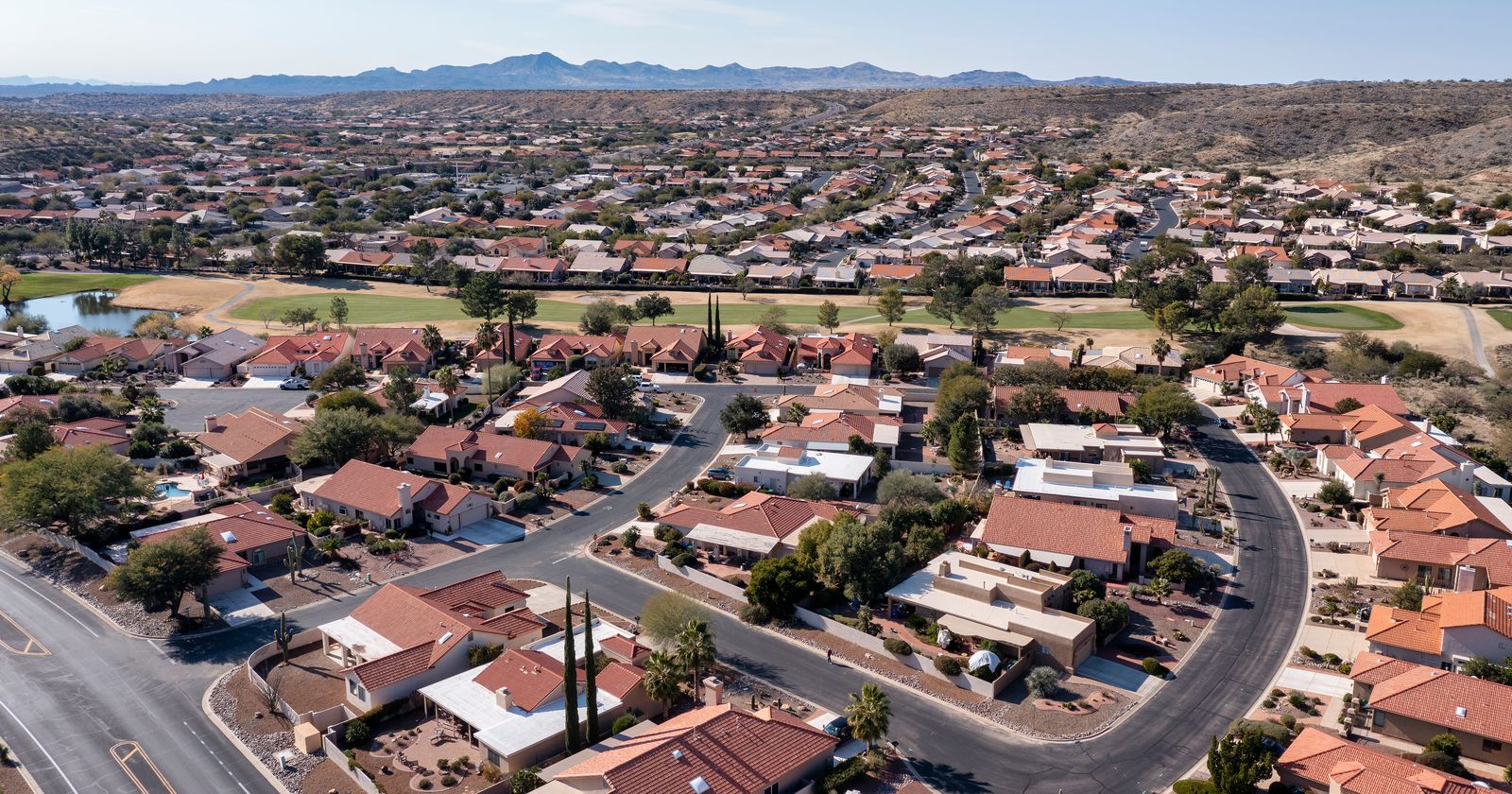
Every fall we get the same phone call from a couple who just closed on a winter home in Green Valley or Oro Valley: "The tax bill came, and it is higher than the seller's was. Did something go wrong?" Usually nothing went wrong. Arizona taxes a second home a little differently than a primary residence, and the difference shows up on the very first statement. This guide walks through exactly what changes when your Tucson-area home is not the place you live most of the year, using the numbers Pima County published for the 2026 tax year. If you are still deciding where to buy, start with our snowbird's guide to buying in Tucson and come back here for the tax math.
How Arizona property tax is calculated
Every parcel in Arizona carries two values from the County Assessor. The full cash value is the Assessor's estimate of market value. The limited property value (LPV) is the number your taxes are actually computed on. Since Proposition 117 took effect in 2015, LPV can rise no more than 5% a year over the prior year's LPV, and it can never exceed full cash value (A.R.S. 42-13301). In a rising market that cap is why LPV usually sits well below what you paid for the house.
Two details matter for buyers. First, a sale does not reset the limited value. The statute that lists the events that re-establish LPV (A.R.S. 42-13302) covers new construction, a change in use, splits, and omitted property, not a change of owner, so you generally inherit the seller's LPV and the 5% cap keeps working. Second, residential property in both Legal Class 3 and Legal Class 4 is assessed at 10% of its limited value (A.R.S. 42-15003 and 42-15004). That 10% figure is the assessed value, and every taxing authority's rate is stated per $100 of it.
So the formula is: limited property value times 10%, divided by 100, times the combined rate for your tax area. The Assessor mails a Notice of Value each February (the statute says before March 1), and you have 60 days from the mailing date to appeal the valuation under A.R.S. 42-16051.
Legal Class 3 vs Legal Class 4: why a winter home is a "non-primary residence"
Arizona sorts residential property into legal classes. Class 3 is a home occupied by the owner (or a qualified relative) as a primary residence. Class 4 is everything else residential: subclass 4.1 is an owner-occupied non-primary residence, which is what a snowbird's winter home is, and subclass 4.2 is property used solely as a rental. The Arizona Department of Revenue's primary residence guidelines are blunt about it: a homeowner can have only one primary residence no matter how many homes he or she owns, inside or outside Arizona, and an owner who claims a homestead exemption in another state is disqualified from Class 3 here for that tax year.
The Pima County Assessor decides case by case, and the factors are the ones you would expect: the period of occupancy each year (the single most important factor), where you are registered to vote, the address on your driver's license and vehicle registration, where you file state and federal income taxes, whether you claim a homestead exemption elsewhere, and where your spouse lives. If the Assessor has reason to believe a Class 3 home is really a second home, it mails a Notice of Intent to Reclassify. You have 30 days to respond, and if you ignore the final notice, the county can bill a civil penalty equal to twice the prior year's rebate. If you want to claim Class 3 on a home that qualifies, the form is the Assessor's Affidavit for Primary Residence Classification, which asks you to attest under penalty of perjury that the home is not a vacation home.
The practical rule: if you keep your Minnesota homestead, your Wisconsin lottery and gaming credit, or your Illinois or Michigan principal residence exemption, your Tucson home is Class 4. There is nothing to fix and no reason to fudge it.
The homeowner rebate you do not get on a second home
The real cost of Class 4 is one line on the bill labeled State Aid to Education. Under A.R.S. 15-972 the state pays 50% of the school district's primary tax on Class 3 property (the percentage rose from 47.19% to 50% beginning in 2022), capped at $600 per parcel per year. Class 4 property gets no credit at all. Here is the math on a Green Valley home, using the FY 2026/27 rates on Pima County's published rate sheet for unincorporated Green Valley in Continental Elementary School District 39 and the Santa Rita Fire District:
- Limited property value: $400,000 (assume the Assessor's LPV, not the price; the LPV is often lower).
- Assessed value: 10% of $400,000 = $40,000, or 400 "hundreds."
- Combined rate: roughly $11.39 per $100. That is about $6.66 of countywide levies (Pima County primary $4.2733, library $0.5820, flood control $0.3407, county bonds $0.0875, fire district assistance $0.0334, Pima Community College $1.2021, Central Arizona Water Conservation District $0.1400), plus Continental ESD 39 at $1.5643 primary and $0.3916 secondary, plus Santa Rita Fire at $2.6599 and a $0.1157 bond.
- Gross tax: 400 times $11.39 = about $4,556.
- Rebate if Class 3: Continental's primary rate is $1.5643, so the school primary tax is 400 times $1.5643 = $625.72, and 50% of that is $312.86.
- Net bill: about $4,243 as a primary residence, about $4,556 as a winter home. The snowbird difference is roughly $313 a year.
The gap is bigger where the school district's primary rate is higher. Inside the City of Tucson, Tucson Unified's primary rate is $3.2545, so the same $40,000 assessed value produces a $1,301.80 school primary tax and a 50% rebate of $650.90, which the $600 cap trims to $600. Green Valley's low school rate is one reason its bills stay modest even without the credit.
| Item | Legal Class 3 (primary residence) | Legal Class 4.1 (winter or second home) |
|---|---|---|
| Who qualifies | Owner or qualified relative lives there as their one primary residence; no homestead claimed elsewhere | Owner-occupied part of the year, primary residence is in another state or county |
| Assessment ratio | 10% of limited property value | 10% of limited property value |
| Homeowner rebate (State Aid to Education) | 50% of school district primary tax, up to $600 a year | None |
| Senior valuation freeze | Available if age, residency and income tests are met | Not available |
| Example: $400,000 LPV, Green Valley, 2026 rates | About $4,243 | About $4,556 |
| Example: $400,000 LPV, City of Tucson, 2026 rates | About $5,007 (rebate capped at $600) | About $5,607 |
Pima County rates by area for the 2026 tax year
Your total rate depends on your tax area: the county, the school district, the fire district, and any city or special district that overlaps your parcel. The countywide layer above (about $6.66 per $100) applies everywhere in Pima County. The combined figures below add the school and fire districts that cover most homes in each area, from the county's FY 2026/27 levy and rate sheet; they are approximate, they leave out small items like the $0.05 JTED levy and street-lighting districts, and the exact rate for any parcel is on the Pima County Treasurer's site.
- Unincorporated Green Valley: no town property tax, because Green Valley is not a municipality. Continental ESD 39 ($1.5643 primary, $0.3916 secondary) and Santa Rita Fire District ($2.6599 plus $0.1157 bond; the district was renamed from Green Valley Fire in 2024) bring the combined rate to roughly $11.39.
- Sahuarita (Quail Creek, Rancho Sahuarita): no town property tax. Sahuarita Unified 30 runs $3.2911 primary and $2.9220 secondary, and the Santa Rita Fire District now covers the whole town, for a combined rate near $15.65. Two community facilities districts add to that where they apply: Quail Creek CFD at $1.8219 and Rancho Sahuarita CFD at $4.99.
- Oro Valley (Sun City Oro Valley): no town property tax. Amphitheater Unified 10 ($3.1544 primary, $0.1878 desegregation, $1.1442 secondary) and Golder Ranch Fire ($2.67 plus $0.09 bond) put the combined rate near $13.91.
- Marana (Dove Mountain): no town property tax. Marana Unified 6 ($3.1681 primary, $2.1933 secondary) and Northwest Fire ($3.0082 plus $0.196 bond) come to roughly $15.22. Marana's community facilities districts (Gladden Farms at $2.20, Gladden Farms II, Saguaro Springs and Mandarina at $2.80 each) are billed on top for parcels inside them, and some Dove Mountain-area parcels have carried CFD lines in the past, so we pull the actual tax history before you write an offer.
- City of Tucson: the city levies its own tax ($0.4043 primary, $0.0202 tort judgments, $0.5458 secondary) and city fire is funded through it, so there is no fire district line. Tucson Unified 1 is the heavy piece at $3.2545 primary, $1.3845 desegregation and $1.7501 secondary (the secondary rate more than doubled this year for voter-approved bonds), for a combined rate near $14.02.
The pattern surprises people: unincorporated Green Valley, with no town and a small elementary district, carries the lowest combined rate of the five. If you are weighing those areas against each other on lifestyle as well as taxes, our comparison of Green Valley, SaddleBrooke and Oro Valley and the roundup of the best 55+ communities in Tucson cover the rest of the decision.
"Do not fall in love with a rate. Two homes at the same price can sit in different tax areas and be a thousand dollars apart. We pull the Treasurer's history on every home before an offer goes out, so the first bill is never a surprise." David Urbaniak
When the bill arrives and when the halves are due
The Pima County Treasurer mails statements in mid-September for the tax year that began January 1. Under A.R.S. 42-18052, the first half is due October 1 and becomes delinquent after 5:00 p.m. on November 1; the second half is due March 1 and becomes delinquent after May 1. If the whole bill is $100 or less, it is due in full October 1. Delinquent taxes accrue interest at 16% per year, and a fraction of a month counts as a whole month (A.R.S. 42-18053). You may pay the full year in the fall if you prefer one check.
If you carry a mortgage, your lender will usually impound (escrow) property taxes with your monthly payment and pay the county directly. Pima County sends "Taxpayer Information Statements" to owners whose lender pays, with no coupons, and provides statement data to mortgage servicers on request. Two snowbird cautions: the law says your liability does not depend on either you or the lender receiving the statement (A.R.S. 42-18054), so confirm in October that the first half was actually paid, and make sure the Assessor has your mailing address, since the Notice of Value and the tax statement both go to the address on file. Our lock-and-leave checklist has the mail-forwarding steps.
The senior freeze, and why most snowbirds do not qualify
The Senior Property Valuation Protection Option, which everyone calls the senior freeze, holds a home's limited property value flat for three years. It is a real benefit for full-time retirees, but the Pima County Assessor's 2026 guidelines set three tests that a winter home will not pass:
- At least one owner must be 65 by September 1 of the application year.
- The home must be the applicant's primary residence, and the applicant must have owned and lived in it for the two years before applying. Rentals and mixed-use properties do not qualify.
- Average total income from all sources over the prior three years, including Social Security and other non-taxable income, cannot exceed $47,712 for one owner or $59,640 for two or more owners (the 2026 limits, adjusted annually).
Applications are due September 1 with copies of driver's licenses and three years of income documents. Even for those who qualify, the freeze applies to the value only; the tax rates set each August still move, so the bill can still change. If you plan to make Tucson your full-time home down the road, note the two-year residency clock starts when you actually move in, not when you buy.
If you rent the home in summer
Plenty of snowbirds offset costs by leasing the home to a traveling nurse or a university family from May through October. Three things change when you do:
- Rental tax. Effective January 1, 2025, Arizona cities and towns can no longer levy transaction privilege tax on residential rentals of 30 days or more (SB 1131), and the state and county never taxed them, so a long-term summer lease carries no TPT and needs no TPT license. Stays under 30 days are different: they are still taxed under the transient lodging rules at the state, county and city level.
- Registration. A.R.S. 33-1902 requires every residential rental to be registered with the County Assessor, and the Assessor will classify the property as Class 4 rental. Since a winter home is already Class 4, the tax math does not change.
- Community rules. Most 55+ communities require tenants to meet the age minimum and set minimum lease terms, and Green Valley Recreation membership stays with the home, so read the CC&Rs before you list it.
No transfer tax in Arizona, but there is an affidavit at closing
Buyers from Illinois, Michigan and Wisconsin are used to paying a transfer tax at closing. Arizona has none, and cannot add one: voters passed Proposition 100 in 2008, which wrote a ban on any new real estate transfer tax into Article 9, Section 24 of the state constitution. What you will sign instead is the Affidavit of Property Value (A.R.S. 11-1133), a one-page statement of the sale price, financing and intended use that is recorded with the deed for a $2 fee. The Assessor uses it for sales data, and the "intended use" box is the first place it learns whether your new home is a primary residence or a second home. Answer it accurately; it sets up the classification we covered above.
Most of our winter-home clients handle all of this from 1,500 miles away. Our guide to buying a Tucson home from out of state explains remote closings and notary options, and our buyer services page lays out how we work. One 2025 client who bought a Green Valley townhome without setting foot in it put it this way: "David was great with research and communication. He helped us find and purchase a home sight unseen. When we were worried, rattled, or confused, he was an expert at clarifying things, and always maintained a calm demeanor. Whether buying, or selling, we would highly recommend him as a knowledgeable realtor."
Arizona Second-Home Property Tax FAQ
Do snowbirds pay higher property taxes in Arizona?
The tax rate and the 10% assessment ratio are the same whether a home is your primary residence (Legal Class 3) or a second home (Legal Class 4). The difference is the homeowner rebate, formally called additional state aid to education, which pays 50% of the school district's primary tax on a Class 3 home, capped at $600 a year. A winter home does not get that credit, so a snowbird pays a few hundred dollars more per year than a full-time resident in the same house.
How does the Pima County Assessor decide whether my home is a primary residence?
You can have only one primary residence anywhere in the country, and the Assessor weighs facts, not intent: how many months a year you occupy the home, where you are registered to vote, the address on your driver's license and vehicle registration, where you file income taxes, and whether you claim a homestead exemption in another state. If you keep a homestead exemption in Minnesota or Wisconsin, your Tucson home is Class 4. If the Assessor has reason to think a Class 3 home is really a second home, it mails a Notice of Intent to Reclassify and you have 30 days to respond.
How much are property taxes on a $400,000 home in Green Valley?
Roughly $4,200 to $4,600 a year for a home with a limited property value of $400,000, using the FY 2026/27 rates published by Pima County for unincorporated Green Valley in the Continental Elementary and Santa Rita Fire districts (about $11.39 per $100 of assessed value). Assessed value is 10% of limited value, so $40,000 times $11.39 is about $4,556 before the rebate. A full-time resident would get about $313 back through the homeowner rebate; a snowbird would not. Note that limited value is usually below what you paid, so many bills come in lower.
When are Pima County property taxes due?
Pima County mails statements in mid-September. The first half is due October 1 and becomes delinquent after November 1; the second half is due March 1 and becomes delinquent after May 1. Bills of $100 or less are due in full October 1. Late payments accrue interest at 16% per year, and a partial month counts as a whole month.
Can a snowbird qualify for Arizona's senior property tax freeze?
Almost never. The Senior Property Valuation Protection Option freezes the limited value of a primary residence for three years, but you must be at least 65, have owned and lived in the home for the two years before applying, and have average total income over the prior three years of no more than $47,712 for one owner or $59,640 for two or more owners for 2026. A winter home fails the primary-residence test on its own, and the freeze holds the value, not the tax rate.
Do I owe rental tax if I rent my Tucson home out for the summer?
For leases of 30 days or more, no. Since January 1, 2025, Arizona cities and towns may no longer levy transaction privilege tax on residential rentals, and the state and county never did. Short-term stays under 30 days are still taxed under the transient lodging rules. Either way you must register the property as a rental with the Pima County Assessor, and the home will be classified as Class 4 rental property.
Want the real tax history on a home you are watching?
Send us the address and we will pull the Assessor's values, the legal class, the tax area rate and the last three years of bills, so you know the number before you write the offer. Start with our snowbird hub or reach out directly.
Get in Touch